

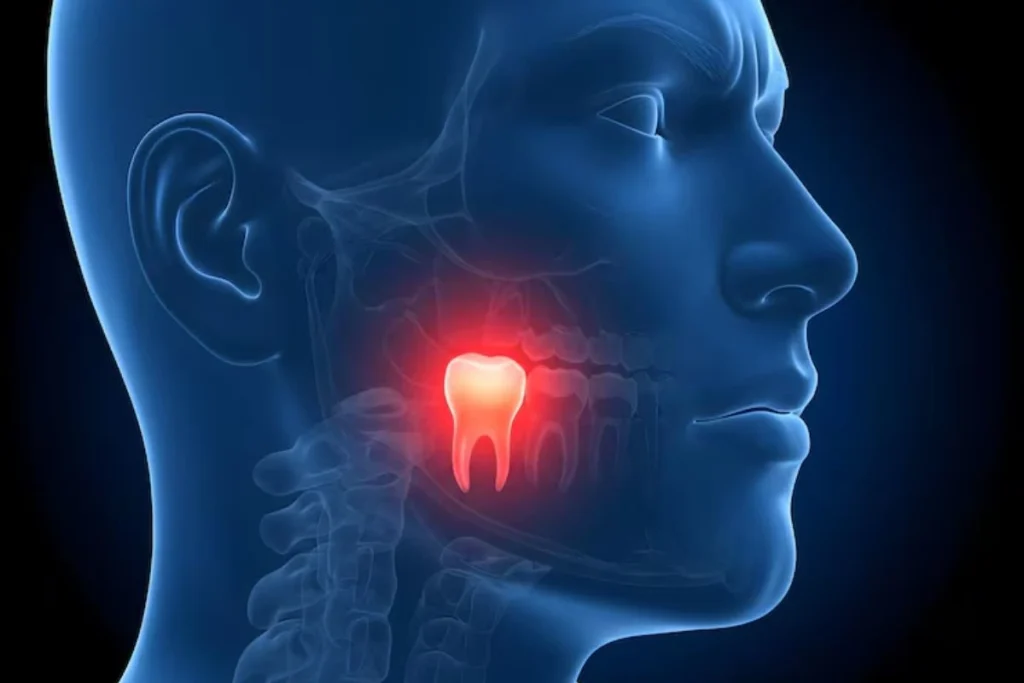
What are impacted wisdom teeth, and which signs indicate them? Usually, between the ages of 17 and 25, the last back teeth to grow in are called the wisdom teeth. Some grow in fine, but most cause pain or problems. Early symptoms of impacted wisdom teeth include pain or pressure at the back of your mouth, red or tender gums, trouble opening your mouth, and sometimes headaches. Spotting these signs early can prevent bigger problems later.
Common Symptoms of Impacted Wisdom Teeth
Impacted wisdom teeth occur when there is not enough room for them to emerge fully. This can happen due to the size of your jaw or the position of your other teeth. The main symptoms of impacted wisdom teeth include:
- Pain at the back of your mouth: You might feel sharp or dull pain near your molars.
- Swollen, tender gums: The gums around the wisdom teeth can become red and sore.
- Jaw stiffness: The jaw may feel tight, making it uncomfortable to open or close your mouth.
- Difficulty chewing or jaw pain from wisdom teeth: Eating may become painful or challenging.
- Bad breath or a bad taste in the mouth: Food and bacteria can get trapped around partially erupted teeth.
If you experience any of these symptoms, it is important to see a dentist. A professional evaluation can determine whether wisdom teeth extractions in Bolton are necessary.
Why Wisdom Teeth Need to Be Removed
Not all wisdom teeth need to be removed. Some grow fully without causing any problems. However, extraction becomes necessary when the teeth are:
- Impacted: Trapped in the jawbone or gums.
- Causing pain: Especially difficulty chewing or jaw pain from wisdom teeth.
- Crowding other teeth: Pushing them out of alignment.
- Leading to infections: Which can affect nearby teeth and gums.
- Creating cysts or decay: increasing the risk of long-term dental issues.
A dentist in Bolton can examine your mouth and take X-rays to determine the position of your wisdom teeth. This helps determine whether extraction is the best option to prevent future problems.
Signs of Jaw Pain and Chewing Problems
Jaw pain is one of the most common signs that wisdom teeth may need to be removed. Signs include:
- Pain while opening your mouth fully.
- Difficulty chewing or biting food properly.
- Jaw clicking, soreness, or a feeling of pressure near the back teeth.
This discomfort often occurs when wisdom teeth push against the neighbouring molars. If ignored, this pressure can lead to crowding, misalignment, or even damage to surrounding teeth.
What to Expect During a Wisdom Teeth Extraction
Wisdom teeth removal is a common and safe procedure. Here’s what usually happens:
- Check-Up: The dentist near you examines your mouth and may take X-rays to view your wisdom teeth.
- Numbing: Local anesthesia is used to numb the area. If more than one tooth is removed, sedation may be offered to help you relax.
- Extraction: The dentist carefully removes the teeth, sometimes in pieces if needed.
- Stitches: These may be used to close the gums and help with healing.
- Recovery: Following proper wisdom teeth extraction recovery tips helps reduce pain and speed up healing.
Recovery Tips for Smooth Healing
Healing after wisdom teeth removal can be simple if you follow these easy steps:
- Rest for 2–3 days and avoid strenuous activities.
- Apply ice to your cheeks to help reduce swelling.
- Eat soft foods like soup, yogurt, mashed potatoes, or smoothies.
- Keep your mouth clean by gently rinsing with salt water.
- Don’t smoke, use straws, or touch the area with your tongue or fingers.
- Take any medicine your dentist gives you for pain or infection.
Following these steps helps your mouth heal faster and prevents problems like infection or dry socket.
Long-Term Benefits of Wisdom Teeth Removal
Removing problematic wisdom teeth provides several long-term benefits:
- Reduces the risk of oral infection.
- Prevents crowding and misalignment of other teeth.
- Decreases the chances of developing cysts or decay around partially erupted teeth.
- Minimizes jaw pain and difficulty chewing.
Wisdom teeth extraction is a preventive step to maintain oral health and avoid more complex dental issues later in life.
Take Charge of Your Healthy Smile!
Don’t ignore wisdom teeth pain, swelling, or trouble chewing. Taking care early can stop infections, crooked teeth, and long-term pain. Book an appointment at South Hill Dental for a full check-up and personalized care. Their expert team will help keep your teeth healthy, your jaw comfortable, and your smile confident. Start your path to a pain-free, strong, and healthy mouth today.
FAQs
How can I tell if my wisdom teeth are impacted?
Impacted teeth usually cause pain, swelling, or jaw stiffness. X-rays are the only way to confirm their exact position.
Does wisdom teeth removal hurt?
The procedure is done under anaesthesia, so there is no pain during surgery. Some soreness is normal during the recovery period.
How long does it take to recover from an extraction?
Most people heal in 1–2 weeks. Following wisdom teeth extraction recovery tips can help reduce discomfort and swelling.
Can impacted wisdom teeth affect other teeth?
Yes. They can crowd teeth, cause misalignment, and increase the risk of decay or gum problems.